
Soil pits: targeting compaction before summer soil amelioration
24 November 2026
Understanding what is restricting crop root growth is the first step towards effective soil amelioration. OptiSoil’s field investigations during the 2026 season are examining how soil compaction and chloride salts are affecting root development in canola and other crops, helping identify where targeted work could make the greatest difference.
These investigations also help calibrate our depth-to-constraint maps, connecting mapped soil information with what we observe in the paddock.
What can a soil pit tell us?
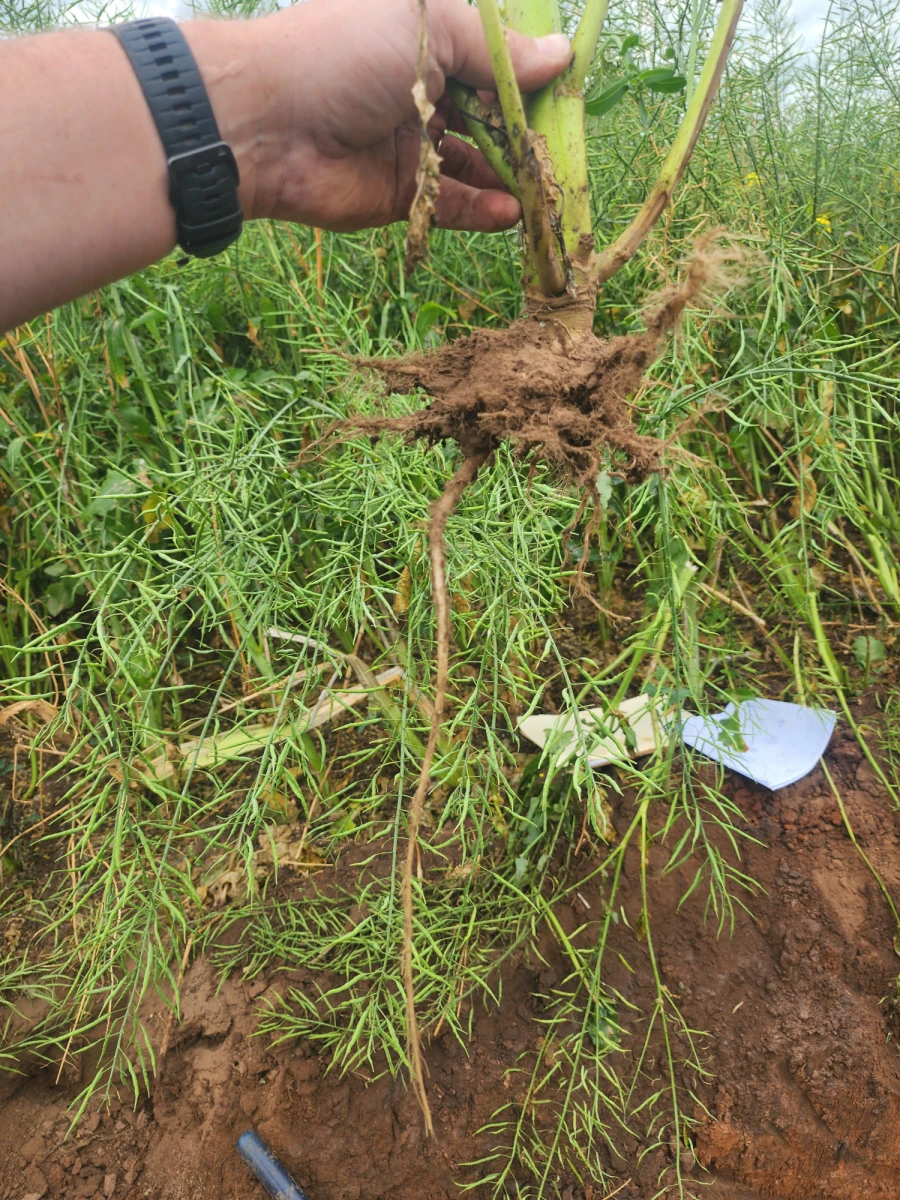
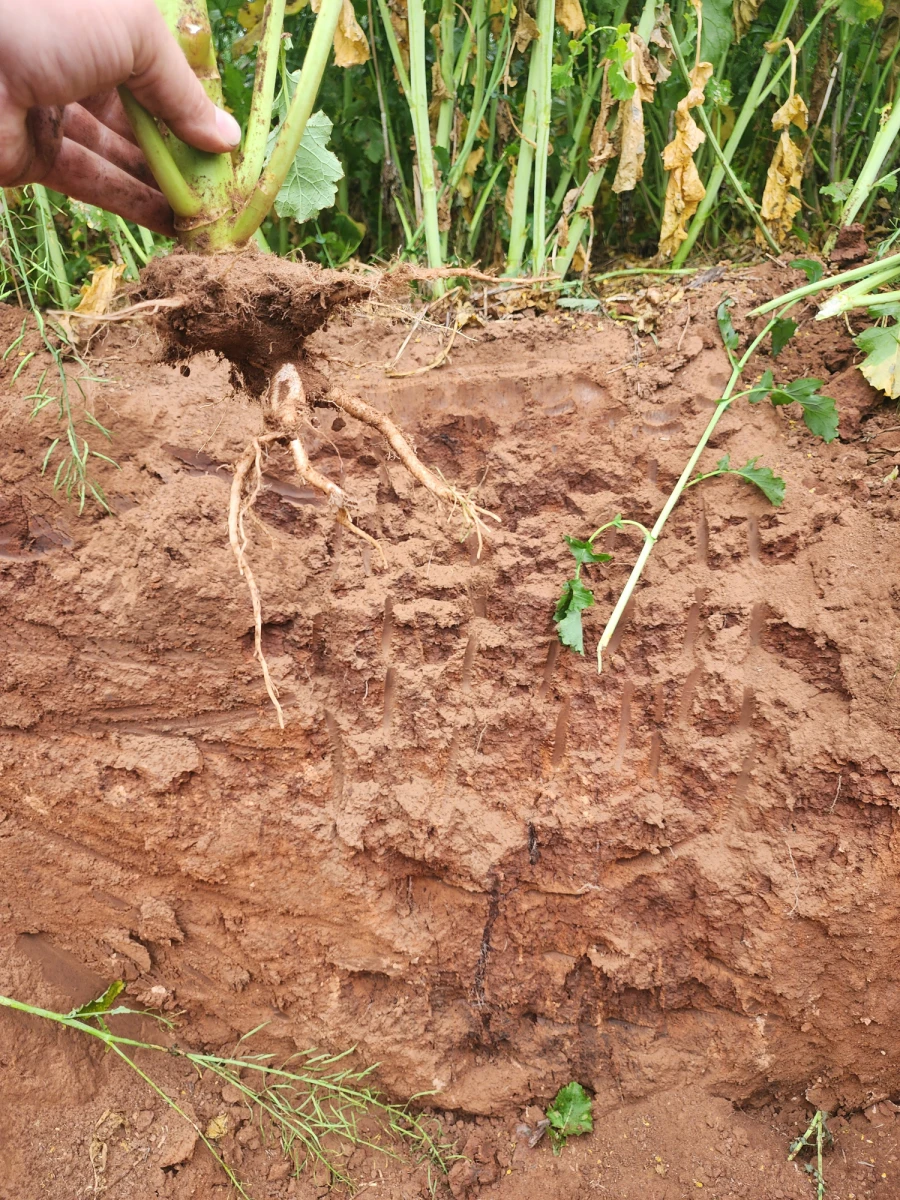
A soil pit allows us to examine the soil profile and see how roots are growing through different layers. Combined with soil testing, these observations help distinguish physical barriers, such as compaction, from chemical constraints, including elevated chloride levels.
Identifying the depth and nature of a constraint matters. A shallow compacted layer requires a different management approach from a deeper chemical limitation, even when both occur in the same soil profile.
A shallow compaction layer offers a practical opportunity
At the site examined, subsoil constraints are present, but a shallow compaction layer stands out as a practical priority for management.
Our assessment suggests that a tyne machine working slightly deeper than the compacted layer could help loosen this restriction during the summer fallow. Depending on soil test results and the crop nutrition plan, there may also be an opportunity to combine the operation with pre-sowing fertiliser placement.
The working depth should follow the diagnosed constraint, with machinery choice and soil conditions considered before proceeding.
Ranking soil amelioration options by likely value
For this site, targeting shallow compaction appears to offer the strongest low-cost, potentially high-impact opportunity. It takes priority over high rates of gypsum or compost, or a deeper ripping operation.
Those treatments may have a place where diagnosis supports them. Here, the immediate opportunity is to address the shallow physical barrier. That work would target compaction, while the deeper chloride constraint would still need to be considered in ongoing crop management.
The aim is to match the investment to the problem and prioritise work with the best prospect of a worthwhile response.
Using soil pits to calibrate depth-to-constraint maps
Depth-to-constraint maps help describe where root-limiting soil conditions occur and how their depth varies across a paddock. Field observations and soil testing are essential to check and refine that information.
By comparing mapped constraints with the soil profile and crop rooting patterns, we can develop more useful guidance on where to target amelioration and how deep an operation may need to work.
Make the most of the summer fallow
The summer fallow provides a limited window for soil amelioration. Investigating constraints before machinery enters the paddock helps growers prioritise their time, budget and equipment.
This 2026 investigation reinforces the value of site-specific diagnosis. Where several constraints occur together, the best first step may be a targeted operation that addresses an accessible limitation.
Contact OptiSoil to discuss soil constraint assessment, depth-to-constraint mapping and practical amelioration planning for your paddocks.
More Photos